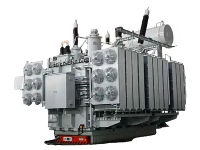
Electricity is one of those things we totally take for granted until the lights go out. But getting power from a massive generator all the way to your living room outlet? That is a seriously complex balancing act. Behind the scenes, there is an entire army of heavy-duty equipment working 24/7, and right at the heart of it all is the high voltage transformer for power grid.
Whether we are talking about traditional power plants, massive solar farms, or regional substations, they all rely on these heavy-lifters to move electricity over massive distances. By cranking the voltage up or stepping it down, these transformers cut energy waste to a minimum, keep the grid from going haywire, and make sure juice hits our homes and businesses safely.

As power demands skyrocket and green energy shakes up the status quo, these machines are more critical than ever. That is where we come in. At Yawei Transformer, we have spent years tailoring high voltage transformer solutions for utility grids, substations, and major industrial setups worldwide.
What Exactly Is a High Voltage Transformer for Power Grid?
Think of a high voltage transformer for power grid as an electrical translator. It takes electrical energy from one circuit and shifts it to another by changing the voltage levels via electromagnetic induction.
Look at it this way: electricity leaves a generator at a pretty low voltage. If you tried to send it across the country like that, most of it would just bleed off as wasted energy before reaching its destination. A high voltage transformer solves this by giving the voltage a massive boost, letting it travel incredibly far with barely any waste. Once it gets close to a town or factory, another transformer steps it back down so it is safe to use.
Here is a quick look at what they actually do day-to-day:
Boost generator voltage so it can travel hundreds of miles.
Drop transmission voltages back down at local substations.
Link up different voltage networks across the grid.
Keep power delivery steady and prevent unexpected drops.
Help loop renewable energy sources into the main utility grid.
To give you a real-world example, power generated at a plant might start at just 10–30 kV. A step-up transformer kicks that up to 110 kV, 220 kV, or even a massive 500 kV for the long haul. Later on down the line, step-down transformers ease it back into regional distribution levels.
Why the Grid Cannot Survive Without High Voltage Transformers
The biggest enemy of long-distance power travel is line resistance-it basically turns electricity into useless heat. By raising the voltage, you can push the exact same amount of power using less current, which drastically cuts down that heat loss. It's the main reason utilities bother with high voltage systems in the first place. A solid high voltage transformer for power grid setups keeps the whole operation running efficiently instead of burning cash through wasted power.
Modern power grids have a lot to deal with-surging demands, unpredictable weather, and sudden spikes. High voltage transformers act as stabilizers, managing voltage levels so everything flows smoothly.
They are the secret behind:
Reliable, steady voltage output.
Cleaner power quality.
Fewer random voltage drops or spikes.
A much more adaptable grid network.
In large substations, you absolutely cannot afford a transformer failure, because one bad breakdown can knock out power for an entire region.
Making Green Energy Actually Work
Renewable energy has completely flipped the script on how grids operate. Solar and wind farms usually generate electricity at a medium voltage level, which doesn't match the high-voltage lines they need to connect to. A high voltage transformer for power grid applications bridges that gap perfectly.
You will find them working hard in:
Large-scale wind farms.
Massive solar arrays.
Battery Energy Storage Systems (BESS).
Hybrid renewable power setups.
The Main Types of Transformers You'll Spot in the Wild
Power Transformers
These are the absolute workhorses of the transmission world. You'll usually spot them sitting inside major substations, handling massive amounts of electricity and shifting it between major regional networks.
Typical spots you'll find them:
Transmission hubs.
Interconnection points where grids meet.
Heavy industrial power yards.
They usually come with pretty serious voltage ratings like 110 kV, 220 kV, 330 kV, or 500 kV. They are built to run non-stop for decades without breaking a sweat.
Step-Up Transformers
Just like the name says, these guys take the lower voltage coming right out of a generator and crank it up before it hits the open road.
Commonly paired with:
Thermal and coal power plants.
Hydroelectric dams.
Wind and solar fields.
Step-Down Transformers
These do the exact opposite. They take that ultra-high, dangerous transmission voltage and dial it down to a manageable level for everyday distribution networks.
They feed directly into:
Industrial parks and factories.
Commercial hubs and office buildings.
Neighborhoods and residential areas.
Inside a High Voltage Transformer: The Core Pieces
It takes a lot of specialized components working in perfect harmony to keep these giants running safely. Here is a breakdown of what is actually inside:
| Component | Function |
| Magnetic core | Provides a low-loss path for magnetic flux |
| High voltage winding | Handles high voltage input or output |
| Low voltage winding | Transfers power to lower voltage circuits |
| Transformer oil | Provides insulation and cooling |
| Bushings | Connect internal windings with external circuits |
| Tap changer | Adjusts voltage levels when needed |
| Cooling system | Removes heat generated during operation |
| Protection devices | Detect and prevent abnormal conditions |
Cut corners on any of these pieces, and the whole transformer's lifespan and efficiency take a major hit.
Real-World Design Challenges That Engineers Face
Getting the sizing wrong on a grid project is a massive headache. When choosing a transformer, engineers have to look at the current grid requirements, day-to-day load demands, short-circuit risks, and even leave room for the local area to grow over the next 10 to 20 years.
Standard capacities usually range across:
10 MVA
50 MVA
100 MVA
200 MVA
500 MVA and beyond
Get the sizing right, and a good transformer will quietly do its job for decades.

Because these transformers run 24/7, even a 1% improvement in efficiency adds up to massive cost savings over the years. Designers are constantly tweaking core and load losses, winding geometry, the quality of the magnetic steel, and how well the unit sheds heat to keep those losses as low as humanly possible.
Transformers get hot-really hot. If you don't cool them down properly, the internal insulation degrades fast, and that leads to catastrophic failures. Here are the common cooling setups used to keep things chilly:
| Cooling Method | Description |
| ONAN | Oil Natural Air Natural cooling |
| ONAF | Oil Natural Air Forced cooling |
| OFAF | Oil Forced Air Forced cooling |
| OFWF | Oil Forced Water Forced cooling |
Which one gets picked depends entirely on how big the transformer is, where it is being installed, and how hard it is going to be pushed.
Where High Voltage Transformers Do Their Best Work
Utility Transmission Networks: The backbone of the grid. They link different regional voltage lines together so power can seamlessly cross state lines.
Renewable Energy Hubs: Wind turbines and solar fields would be useless without transformers to step up their clean energy so the main grid can actually accept it.
Heavy Industrial Facilities: Places like steel mills, mines, massive chemical plants, and sprawling data centers use an unbelievable amount of power and need their own high-voltage setups to keep running smoothly.
Why Partner with Yawei for Your Next Project?
We get it-no two power projects are identical. A lot depends on your local climate, grid standards, and capacity goals. That is why Yawei focuses on building tailor-made high voltage transformer for power grid solutions rather than taking a one-size-fits-all approach.
We combine precision engineering with advanced manufacturing tech-things like high-tech core cutting, automated winding setups, vacuum oil filling, and rigorous testing environments. It's the only way to guarantee a machine will survive harsh real-world grid conditions.
Plus, nothing leaves our floor without passing a brutal gauntlet of quality tests:
| Test Item | Purpose |
| Winding resistance test | Checks winding condition |
| No-load loss test | Measures core losses |
| Load loss test | Evaluates operating efficiency |
| Insulation test | Verifies insulation performance |
| Partial discharge test | Detects insulation defects |
| Temperature rise test | Confirms cooling performance |
How to Choose the Right Transformer Without the Headaches
If you are mapping out a grid project, here is the checklist you need to follow:
Lock In Your Voltage Ratios: Make sure the transformer matches your exact grid specifications (e.g., 35kV/110kV, 110kV/220kV, or 220kV/500kV).
Calculate Your Load (and Future Growth): Don't just build for today. Look at peak demand, future expansion plans, and potential green energy hookups so you don't outgrow your equipment too fast.
Analyze the Environment: Where is this thing going? High altitude, extreme humidity, freezing winters, or heavy coastal salt pollution will completely change the design requirements.
Plan for Easier Maintenance: Look for smart features that make life easier down the line-things like built-in temperature indicators, gas relays, and online monitoring systems so you can catch issues before they turn into blackouts.
What's Next for Transformer Tech?
The energy sector is moving incredibly fast right now, and transformers are evolving to keep up. We are seeing a massive shift toward smart monitoring systems that use digital tech to track a transformer's health in real-time, predicting faults before they happen. There is also a major push for even higher efficiencies using next-gen insulation materials and eco-friendly cooling options.
Ultimately, as the world transitions to a cleaner, more distributed power setup, the humble high voltage transformer for power grid will remain the anchor keeping the lights on. If you need a partner to help build out your next grid infrastructure project, Yawei Transformer has the engineering expertise to make it happen.
FAQ
Q: How soon can you delivery the transformer?
A: It depends on the quantity and capacity of the transformer, normally within one month since the date drawing confirmed by buyer.
Q: How long can you provide the quality warranty?
A: 24 months since the date transformer operated.
Q: What payment method do you accept?
A: T/T (wire transfer) preferred, L/C both accepted.