

How do you hook up a transformer?
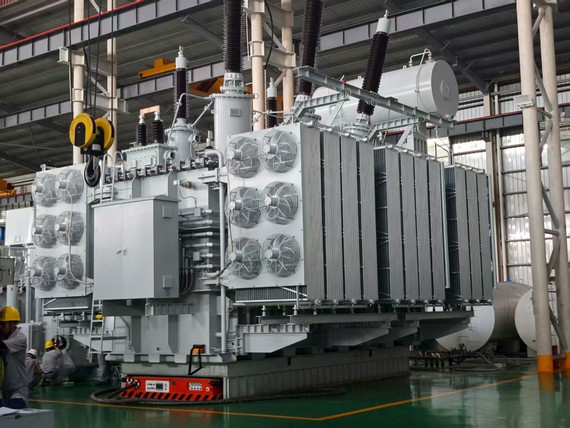
 Transformers are very important in the world of electrical systems, it is used for transferring electrical energy from circuit to another. They are applied in everything from small appliance transformers to larger ones in industry. Knowing how to connect a transformer correctly will really help you both stay safe and get more done. This complete guide will walk you through all the procedures for wiring a transformer, giving you all the skills you need in order to do it with confidence and precision.
Before getting into the wiring stuff you should have a working knowledge of how transformers work. Transformer is made up of basically two elements - primary element and secondary element. These windings are basically coils wrapped around the core of something usually made out of iron. The electric is flowing trough the primary coil, a magnet field is created and so on secondary a electric is also build up. Transformer can then adjust the voltage level if there is increase (voltage going up) or decrease (voltage going down).
Transformers are on based on principle of electromagnetic induction. There is a magnetic flux in the core generated by an AC on the primary winding, then it links to the secondary winding. The voltage induced in the secondary winding is proportional to the turns ratio of the winding. It is really necessary to comprehend this process so as to grasp how transformers change voltage levels successfully.
The main material of a transformer is also important. Iron is commonly as it have good magnetic properties which enhances the transformer. But for high-frequency usages, there are ferrite cores that can bring down the energy loss. the main material we choose might impact the transformer's volume, performance, cost etc. so we have to consider when we make transformers:
Transformers are designed for different applications, there are many types of transformers serving specific purposes as follows:
· Step-up Transformers: This is to improve the voltage from the primary side to the secondary side. It can be found in power generation and transmission.
· Step-down Transformers: Decrease voltage from the primary to the secondary side, these are mainly used for distribution on the domestic and commercial side.
· Isolation Transformers: They provide electrical isolation to the 2 circuits in order to make sure safety by keeping direct current out the 2 circuits.
· Autotransformers: They use the same wound coil for both circuits. This makes for smaller cheaper voltage regulation
A particular sort of transformer must be comprehended for correct wiring and effective operation.
Safety first when it comes to electricity. After safety protocol you protect not just yourself but the transformer's life and reliability as well. Here is what needs precaution:
Before you start wiring anything, ensure that the power source is turned off. Step is very important to avoid accidental electric shock and to protect yourself from any potential damage.
Putting on proper personel protection equipment(PPE)is an unchangeable situation when work with electirical system. Additionally, insulated gloves and safety goggles should be worn to avoid electric shock, falling debris, etc., thus ensuring your own safety when wiring.
Every transformer will have its own rules and prevention methods for manufacturers. Very much so, it is very much needed if you want to have specifics as to the wiring process and making sure a specific transformer you use is safe. If we do as these guides say then there will be no accident, the transformer would do what its supposed to do.
Prepare the tools
To hook up the transformer, you have to find a set of tools and materials to make it easier. If you have the right equipment, then wiring should be efficient and accurate.
Need a full toolkit when wiring transformer. Essential tools include:
· Screwdrivers: A variety of screwdrivers must be had to deal with all the screws and fasteners which can be found on a transformer connection.
· Wire Cutters and Strippers: It's the tools needed to cut down the wires to their required lengths and strip off the insulations to expose the core.
· Multimeter: A must-have for checking voltage, current, resistance. Make sure your wiring's right, your transformer's safe.

As well as the tools that are needed for wiring are some materials:
· Electrical Tape: Used for insulating the wires' joint parts so as to avoid accidental contact and short circuit accidents.
· Wire Nuts: Very important to making sure that wires have good, reliable electrical contact
· Transformer Wiring Diagram: Usually made available by the manufacturer, it works like a blueprint of how to connect the transformer properly, helping you with your wiring.
Wiring a transformer should pay attention to the details and follow an orderly manner. Follow these steps to successfully install the software:
Transformer usually comes with a wire that is labelled as an input/output connection:
· Primary Side Wires: These are the wire which are connected to power source They are also commonly called as H1, H2 (And H3,H4 for three-phase transformer).
· Secondary Side Wires: This is the output wire coming from the load. They are labeled as X1, X2 (and X3, X4 for three-phase).
It's very necessary to identify those wires accurately for wiring.
To link the main
 1. Secure Connections: Use the wire nuts to join the primary wires of the transformer to the power source. The H1 and H2 need to be connected with the wire leads from the source, making sure they have a good, solid connection.
2. Check Voltage Rating: With a multimeter confirm that the power source's voltage rating matches up to the transformer. And so this is necessary to avoid overvolts that would be bad to a transformer or something that is being attached to it.
For the secondary winding:
1. Connect Load: Attach the secondary wires (X1, X2) to the load or device that needs the power. (connection stight and security are kept to foster good powertransfer)
2. Test Continuity: To check for continuity with your multimeter at all of your connections, make sure that nothing breaks or shorts and stops it from working.
Finalizing the installation involves:
1. Apply Electrical Tape: Wrap the electrical tape around all of the wire nuts as well as the exposed connections. This is a preventive action to avoid accidental touch and short circuit as well as to protect the transformer and machine.
2. Secure Transformer: Install the transformer firmly in a place where it's good for ventilation and cooling the heat. Good mounting to prevent physical harm and the best performance.
To test the transformer:
Transformer has been wired up, testing must be done prior to its put into regular use. This guarantee is for the transformer's reliable and functional performance.
1. Power On: Turn the power source on and use a multimeter for measuring the output voltage off the secondary winding. Thus it verifies that the transformer is working as per its specification.
2. Check for Correct Voltage: Make sure the output voltage is as expected for your app. If any mistakes occur, deal with them first before using it as normal.
Addressing common issues involves:
· No Output Voltage: examine all joints for firmness and confirm that the energy supply is going. If the connection is poor or the power source is poor, there is no output voltage.
· Overheating: Make sure the transformer is not overloaded and it has enough airflow. Overheating can mean either an overload of energy or not enough cooling. Both are bad.
· Buzzing Noise: This might mean there are loose laminations or windings. Check the transformer and tighten any loose places to fix it and stop new harm from happening.
Hooking up a transformer is relatively easy but detail-focused so you have to be careful about safety and precision. By using this complete guide, you will be able to make sure that your transformer is wired properly, which means that you will get reliable and efficient energy for all of your electrical systems. Always refer back to the manufacturer's instructions for specifics pertaining to your transformer model. Proper install and test so no issues and you can extend the life of your transformer.
With the proper tools, precautions and information you can hook up a transformer and have it be safe and effective. Whether you like building things with your own hands on your own time or if being a professional electrician is your job, understanding how transformers wire together is a very useful ability.
FAQ
Q: How can we guarantee quality?
A: Always a pre-production sample before mass production; Always final Inspection before shipment;
Q: Why should you buy from us not from other suppliers?
A: As an enterprise specializing in transformer production for 28 years. ISO9001-2008, OHSAS 18001:2007, ISO4001:2004L certificates, we have IEC, ANSI, KEMA, GOST standard, we have high quality, fast delivery, guarantee after-sales service and factory price.
Q: What services can we provide?
A: Accepted Delivery Terms: FOB,CIF,EXW Accepted Payment Currency:USD,CNY; Accepted Payment Type: T/T,L/C; Language Spoken:English,Chinese
Q: what can you buy from us?
A: 110kV-500kV Oil-immersed Power Transformer,Dry-type Transformer,Unpacked H Grade Dry Transformer,Oil-immersed Distribution Transformer, Pad-mounted Transformer,Enameled Wire,Composite Wire,Transposed Wire,Paper Covered Wire,Film Wrapped Wire


