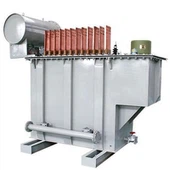
If you've spent any time around data centers lately, you know heat is the recurring headache. As racks get denser and AI workloads push hardware harder than ever, keeping things cool isn't just a mechanical problem-it's an electrical one, too. And right in the middle of that intersection sits the cooling tower, along with a piece of equipment that doesn't always get the attention it deserves: the transformer.
So let's break it down.
What Exactly Is a Data Center Cooling Tower?
In plain terms, a cooling tower is a heat-rejection device. It's part  of a chilled-water system that takes waste heat from the facility and dumps it into the outside air-mostly through evaporation.
Here's how the loop usually works:
Servers generate heat (lots of it).
Cooling units pick up that heat and transfer it to chilled water.
Chillers move that heat over to a condenser water loop.
The cooling tower then releases that heat outdoors.
Cooled water cycles back to start the process again.
It's a pretty elegant setup, and it allows massive facilities to stay within safe temperature ranges without burning through insane amounts of energy. Well, without wasting insane amounts, anyway.
So, Where Do Transformers Fit In?
Even though cooling towers live on the mechanical side of the house, they're completely dependent on electricity. Fans, pumps, chillers, controllers-none of it works without power. And not just any power, but power at the right voltage, with decent quality, and with enough reliability to keep running 24/7.
That's where transformers earn their keep. They handle a few critical jobs:
Voltage conversion
Utility power usually comes in at medium voltage-too high for most cooling equipment. Transformers step it down to a usable level, safely and efficiently.
Power distribution
In many setups, a dedicated transformer feeds the entire cooling plant. That includes:
- Fan motors on the tower
- Chiller compressors
- Condenser and chilled water pumps
- Water treatment systems
- Building management controls
If that transformer is undersized or poorly chosen, the whole cooling system becomes a weak link.
Choosing the Right Transformer for Cooling Loads
Cooling systems can eat up a big chunk of a data center's total power  budget. So transformer selection matters-not just for performance, but for operating costs.
Energy efficiency
Modern low-loss transformers cut down on core and load losses, which means less wasted heat and lower electricity bills. In a facility that runs nonstop, even a 1% efficiency gain adds up fast.
Reliability
A cooling tower outage isn't like losing a light fixture. Temperatures in the data hall can spike quickly. That's why many operators go with redundant setups-things like N+1, 2N, or dual power paths. These designs keep cooling running even if one transformer or feed goes down.
What About Harmonics?
Here's a wrinkle: a lot of today's cooling towers use variable frequency drives (VFDs) to adjust fan and pump speeds. Great for energy savings, but VFDs tend to introduce harmonic currents into the electrical system. Left unchecked, those harmonics can cause overheating, nuisance tripping, or even equipment damage.
Different transformer types handle this in different ways:
| Transformer Type | What It Does |
|---|---|
| K-Rated | Handles heat from harmonics without breaking a sweat |
| Harmonic Mitigating | Actually reduces harmonic distortion at the source |
| Isolation | Improves overall power quality and adds protection |
| Dry-Type | Safe for indoor installation; no flammable liquids |
Each has its place, and the right choice depends on the specific load profile and site conditions.
Cooling Towers in the AI Era
AI is changing the game-not just in what servers do, but in how much power and cooling they require. High-density racks mean more heat per square foot, which means larger chillers, higher water flow, and beefier pumps and fans.
That, in turn, puts more pressure on the electrical infrastructure:
Bigger transformers
Stricter power-quality requirements
More redundancy
Better overall efficiency
Cooling towers and transformers used to be designed somewhat independently. That's no longer the case. They're becoming two halves of the same conversation.
Bottom Line
Cooling towers are essential-no question about it. But they're only as effective as the power system behind them. Transformers make sure voltage is right, power stays clean, and operations keep running even when things go wrong. As data centers evolve to handle AI and dense compute, choosing the right transformer isn't just a technical detail-it's a strategic one. Get it right, and your cooling system stays boringly reliable. And boring is exactly what you want.
FAQ
Q: How soon can you delivery the transformer?
A: It depends on the quantity and capacity of the transformer, normally within one month since the date drawing confirmed by buyer.
Q: How long can you provide the quality warranty?
A: 24 months since the date transformer operated.
Q: What payment method do you accept?
A: T/T (wire transfer) preferred, L/C both accepted.