Whenever the conversation turns to cutting down data center power bills or hitting green targets, everyone immediately points to the flashy stuff-liquid cooling loops, AI-driven airflow management, or upgrading to the latest, juice-sipping servers.
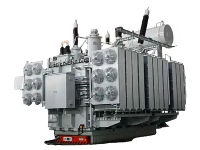
But there's a massive piece of infrastructure that usually just sits in a fenced-off corner, quietly humming away, completely ignored until something goes wrong: the Data Center Transformer.
As cloud computing explodes and AI clusters demand crazy amounts of electricity, operators are starting to realize they can't just focus on the IT racks anymore. Efficiency has to happen at every single stage of the power delivery chain. Because of this, a lot of recent data center pue optimization technology development is shifting focus toward cleaning up electrical distribution losses. And that's exactly where transformers come into play.
What Is Data Center PUE, Anyway?
Before looking at the hardware, let's do a quick refresher on Power Usage Effectiveness (PUE). It's the standard yardstick the industry uses to see how much power a facility actually uses versus how much is just wasted.
The formula is pretty basic:
PUE = Total Facility Energy/IT Equipment Energy
In a perfect world, you'd have a PUE of 1.0, meaning every single watt from the grid goes straight into a server, storage array, or network switch.
In reality? Total fantasy. A good chunk of power always gets eaten up by the supporting cast, including:
Cooling setups and Data Center HVAC Systems
Facility lighting and security
Power distribution networks and transformers
Building management software
The Quick PUE Cheat Sheet
| PUE Value | Efficiency Level |
| Above 2.0 | Poor |
| 1.6 – 2.0 | Average |
| 1.3 – 1.5 | Efficient |
| Below 1.3 | Best-in-Class |
If you're trying to optimize Data Center Energy Efficiency, you can't afford to ignore any source of power loss, no matter how small it looks on a spec sheet.
Why Transformers Matter More Than You Think
Transformers aren't exactly glamorous, but they are the workhorses of the entire electrical layout. Electricity arrives from the utility company at incredibly high voltages. That's way too hot for a server to handle, so transformers step that voltage down through various stages before it hits your UPS, PDUs, and ultimately, the motherboard.
In any given facility, you'll find them doing a few different jobs:
| Transformer Application | Purpose |
| Utility Entrance | Drops mega-voltage from the grid down to manageable levels |
| Distribution Network | Moves power safely across the facility floor |
| UPS Systems | Provides electrical isolation and cleans up voltage spikes |
| Critical Equipment | Final stage protection to ensure clean power hits the racks |
Here's the kicker: unlike cooling fans or even servers that might idle or spin down when traffic is low, transformers are always on. They run 24/7/365. Because they never get a break, even a tiny 1% or 2% inefficiency compounds into a massive amount of wasted cash and carbon over a year.
Breaking Down Transformer Losses
No piece of electrical gear is perfect; you always lose some energy during conversion. With transformers, this waste generally splits into two categories.
1. No-Load (Core) Losses
Think of this as the "vampire draw." These losses happen the entire time the transformer is plugged in and energized, completely independent of whether the data center is running at 5% or 100% capacity. This happens because of things like magnetic hysteresis, eddy currents, and the natural physics of the core material. Bottom line: if the building has power, this loss is happening.
2. Load Losses
These are directly tied to how hard the data center is working. As your servers draw more juice, resistance builds up in the transformer windings, stray magnetic fields wander off, and eddy currents pick up in the conductors. As data centers scale up to handle dense workloads, load losses can skyrocket if you aren't careful.
The end result of both? Wasted electricity and a bloated PUE.
The Double Whammy: Power Loss and Extra Cooling
Here is the connection a lot of people miss: every single watt of electricity lost inside a transformer doesn't just vanish into thin air. It turns into heat.
This sets off a brutal chain reaction. That heat radiates into the room, meaning your Data Center Cooling Infrastructure and Data Center Thermal Management systems now have to work harder-and consume even more energy-just to pump that wasted heat out of the building.
It's a double penalty: you pay for the wasted power at the transformer, and then you pay again to cool it down.
The Real-World Impact
| Factor | Efficient Transformer | Older Transformer |
| Transformer Losses | 50 kW | 100 kW |
| Heat Generated | Lower | Higher |
| Cooling Demand | Less strain on HVAC | High strain on HVAC |
| Impact on PUE | Helps lower it | Drives it up |
For a massive hyperscale facility, swapping out an inefficient transformer can easily trigger a domino effect that slashes annual energy bills by hundreds of thousands of dollars.
How Modern Gear Saves the Day
Thankfully, recent innovations in data center pue optimization technology development have forced transformer manufacturers to step up their game. They've come up with a few clever ways to trim the fat:
Next-Gen Core Materials: Instead of old-school steel, newer models use  grain-oriented silicon steel, amorphous metal cores, or specialized low-loss magnetic alloys. This drastically cuts down on those annoying "always-on" no-load core losses.
Smarter Winding Designs: By tweaking conductor layouts and refining how the internal coils are wound, engineers have lowered electrical resistance, resulting in less heat and much more stable voltage regulation.
Upgraded Thermal Designs: Transformers need good Data Center Thermal Management too. Modern units feature optimized airflow channels, better ventilation, and smart, integrated sensor controls to keep themselves cool without hogging extra power.
Going Digital with Smart Transformers
We're also seeing a big shift toward intelligent monitoring. Instead of just letting a Data Center Transformer sit in a locked room and hoping for the best, operators are using units packed with sensors. These track internal temperatures, load profiles, and power quality in real time. If a transformer starts underperforming or running too hot, the system flags it immediately, allowing for predictive maintenance before it hurts the overall PUE.
Aligning with Sustainable Data Center Design
These days, efficiency isn't just about saving money-it's about hitting aggressive ESG goals. Investing in high-efficiency transformers is a highly effective, low-maintenance way to build a Sustainable Data Center Design.
Less Power Waste: Instantly drops your overall carbon footprint.
Cooler Operations: Takes the pressure off your Data Center HVAC Systems.
Better Reliability: Cooler components last longer and suffer fewer unexpected failures.
Longer Equipment Lifespan: You won't have to replace expensive infrastructure nearly as often.
The AI Challenge

Artificial Intelligence is completely rewiring how data centers operate. Training massive language models takes a mind-boggling amount of power, and rack densities are climbing faster than legacy infrastructure can handle.
In an AI-dominated world, transformer efficiency is no longer optional. When you're pushing megawatts of power through a facility to feed thousands of power-hungry GPUs, high-efficiency transformers are vital to keep distribution losses low, control ambient heat, and keep your PUE from spinning out of control.
Quick Wins: Transformer Best Practices
If you want to maximize your Data Center Energy Efficiency, here is a practical checklist for your electrical infrastructure:
Ditch the Relics: Swap out aging, legacy transformers for modern, eco-design compliant models.
Right-Size Your Load: Optimize how your load is balanced across transformers; running them at terrible load factors kills efficiency.
Shorten the Distance: Keep power distribution distances as tight as possible to reduce line drop losses.
Connect the Dots: Make sure your electrical teams and your cooling/thermal management teams are actually talking to each other so the entire ecosystem is synchronized.
Wrap-Up
It's incredibly easy to get distracted by the latest server tech or cutting-edge cooling liquids when trying to fix a bad PUE. But the electrical highway delivering that power matters just as much.
Transformers may operate out of sight, but their efficiency dictates how hard your cooling systems work, how high your utility bills run, and ultimately, how sustainable your business actually is. If you're serious about long-term optimization, ignoring your transformers is a mistake you can't afford to make.
FAQ
Q: How soon can you delivery the transformer?
A: It depends on the quantity and capacity of the transformer, normally within one month since the date drawing confirmed by buyer.
Q: How long can you provide the quality warranty?
A: 24 months since the date transformer operated.
Q: What payment method do you accept?
A: T/T (wire transfer) preferred, L/C both accepted.