

When people think about power systems in a data center, the usual suspects come to mind-
UPS units, backup generators. And honestly? That makes sense. Those are the big, flashy pieces of kit that keep the lights on.
But there's another component that quietly does a lot of the heavy lifting day to day: the Remote Power Panel, or RPP.
Now, an RPP doesn't change voltage. It's rarely the star of the show in a power room. But it's a key part of how power gets where it needs to go. In fact, how you design and place your RPPs can directly affect-well, it can affect transformer sizing, harmonic performance, and even how easily you can expand later on.
So yeah, RPPs and transformers do very different jobs. But they're more connected than a lot of folks realize.

So What Exactly Is an RPP?
Put simply, an RPP is a secondary power panel. It takes electricity from an upstream PDU and feeds it to multiple server racks.
Instead of running cables all over the place from one central spot, you use RPPs to bring power closer to your IT gear. That makes the whole electrical layout cleaner, way more organized, and-importantly-easier to scale as your facility grows.
A typical RPP handles:
Getting power out to rack loads
Protecting branch circuits
Monitoring power usage
Making future expansion simpler
Keeping cable management sane
It doesn't sound like much. But in a big data center with hundreds or thousands of racks? RPPs are essential for keeping things manageable.
Where Does the RPP Fit In?
Here's a typical power path in a data center:
Utility Grid → Medium Voltage Switchgear → Power Transformer → UPS → PDU → RPP → Rack PDU → Servers
Looking at that chain, you can see the RPP sits pretty close to the actual IT equipment. But every bit of power flowing through that panel comes from upstream-starting with the transformer.
That's why transformer engineers actually care a lot about RPP deployment. How many panels? What loads are they supporting? What's the planned growth? All of that influences which transformer you pick.
Component | Main Job |
Transformer | Voltage conversion, primary distribution |
UPS | Backup power + conditioning |
PDU | Main power distribution |
RPP | Secondary distribution to server rows |
Rack PDU | Power inside the rack |
Servers | Actually using the power |
How RPP Loads Affect Transformer Sizing
Here's the thing-sizing a transformer isn't just adding up today's loads and calling it done.
Most data centers are built with growth in mind. That data hall that's half empty today? In a couple of years, it could be maxed out.
Let's run a quick example:
Number of RPPs | Capacity per RPP | Total Connected Load |
4 | 225 kVA | 900 kVA |
8 | 225 kVA | 1,800 kVA |
10 | 225 kVA | 2,250 kVA |
12 | 225 kVA | 2,700 kVA |
But that's only part of the story. You also have to think about: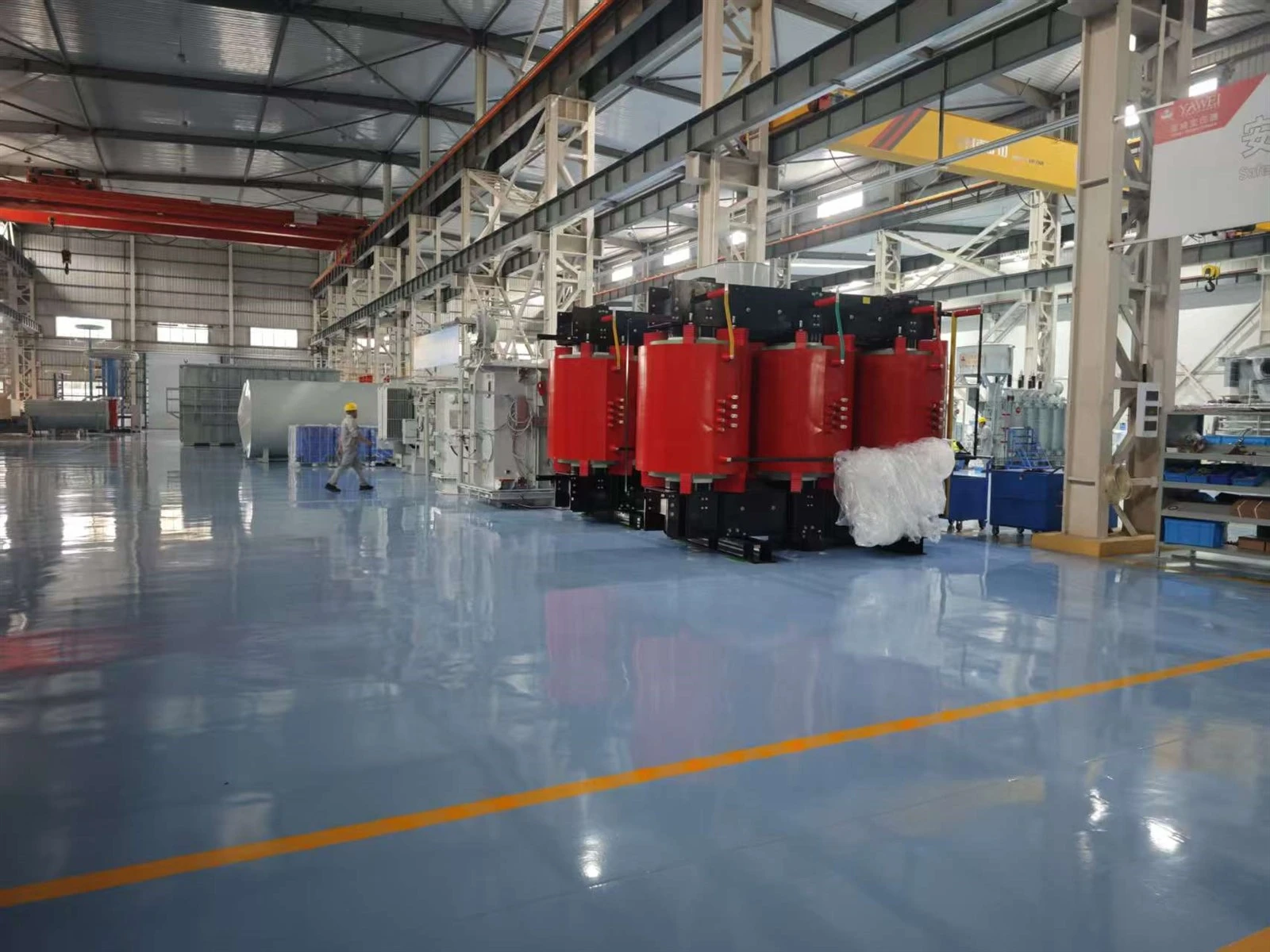
Future expansion
Redundancy needs
UPS losses
Load diversity
Long-term capacity planning
So a facility with 2,250 kVA of calculated load might end up installing a 2,500 kVA-or even a 3,000 kVA-transformer. Because when new racks start showing up faster than expected, a little extra capacity goes a long way.
Connected Load | Recommended Transformer Size |
900 kVA | 1,000 kVA |
1,800 kVA | 2,000 kVA |
2,250 kVA | 2,500 kVA |
2,700 kVA | 3,000 kVA |
Harmonics: The Hidden Headache
Alright, now let's get into the weeds a bit.
Most gear plugged into RPPs uses switch-mode power supplies (SMPS). They're efficient, sure-but they also mess with your power quality by introducing harmonic currents.
Common culprits:
Servers
Storage systems
Network switches
Blade servers
AI and GPU clusters
Instead of drawing a nice, smooth current waveform, these loads create harmonics that travel back through the distribution network and hit your transformer.
Harmonic Order | Typical Source | Potential Problem |
3rd | SMPS loads | Overheated neutral conductors |
5th | UPS, IT gear | Transformer heating |
7th | VFDs | Extra losses |
11th & 13th | Power electronics | Poor power quality |
Over time, too many harmonics can cause:
Higher transformer losses
Hotter operation
Extra stress on insulation
Lower efficiency
Shorter equipment life
Not exactly what you want in a mission-critical facility.
Harmonic Effect | Impact on Transformer |
Eddy current losses | Winding heating |
Stray losses | Lower efficiency |
Higher temperature rise | Insulation ages faster |
Voltage distortion | Poor power quality |
Neutral current buildup | Extra thermal stress |
Why K-Rated Transformers Are So Common
Because harmonics are pretty much unavoidable these days, a lot of data centers go with K-rated transformers. These are built to handle the extra heat from non-linear loads.
K-Factor | Typical Use Case |
K-4 | Light harmonics |
K-13 | Enterprise data centers |
K-20 | Colo/cloud facilities |
K-30 | AI, hyperscale |
The higher the K-rating, the better the transformer handles harmonics without cooking itself. And with AI workloads exploding, K-20 and K-30 transformers are way more common now than just a few years ago.
Harmonic Mitigating Transformers for RPPs
Sometimes handling harmonics isn't enough. In bigger facilities, you want to reduce them at the source.
That's where Harmonic Mitigating Transformers (HMTs) come in. They use special winding arrangements and phase-shifting tricks to cancel out certain harmonics before they spread through your system.
Feature | Benefit |
Harmonic reduction | Lower THD |
Better efficiency | Less energy waste |
Cooler operation | Lower temps |
Improved power quality | Stable voltage |
Equipment protection | Less stress on electronics |
For high-density data centers, HMTs can be a great way to boost reliability and power quality.
Dry-Type vs. Oil-Filled Transformers
For modern data centers, dry-type transformers are usually the go-to. Here's why:
Feature | Dry-Type | Oil-Filled |
Fire safety | Excellent | Moderate |
Indoor installation | Ideal | More restricted |
Maintenance | Low | Higher |
Environmental risk | Minimal | Possible oil leaks |
Data center suitability | Highly preferred | Less common |
Cast resin dry-type transformers give you great fire performance, low maintenance, and fit naturally indoors. That's why they're used all over the world in mission-critical facilities.
Wrapping It Up
At first glance, an RPP looks like just another distribution panel. But it actually plays a much bigger role in your data center's electrical design than most people realize.
Every load connected through an RPP affects transformer capacity, harmonic levels, and long-term performance. And as rack densities go up-and AI drives power demand even higher-these connections matter more than ever.
Choosing the right transformer (K-rated, harmonic mitigating, or high-efficiency dry-type) helps keep things reliable today, while leaving room to grow tomorrow.
In the end, a good power distribution system isn't just about moving electricity. It's about doing it safely, efficiently, and consistently-year after year.
Contact now
FAQ
Q: How soon can you delivery the transformer?
A: It depends on the quantity and capacity of the transformer, normally within one month since the date drawing confirmed by buyer.
Q: How long can you provide the quality warranty?
A: 24 months since the date transformer operated.
Q: What payment method do you accept?
A: T/T (wire transfer) preferred, L/C both accepted.


