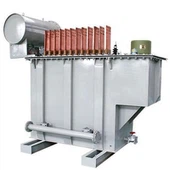
Transformer for ChargePoint Stations
As EV charging infrastructure expands, the electrical system behind the charging station is becoming just as important as the charger itself. A transformer for ChargePoint stations is one of the key pieces of that system. It provides the voltage and power needed to operate EV chargers safely and reliably.
For a small charging site with only a few AC chargers, the electrical requirements may be fairly straightforward. But once a project includes multiple DC fast chargers, the power demand can increase very quickly. In that situation, choosing the right transformer becomes a major part of the overall project design.
In simple terms, the transformer connects the utility's medium-voltage supply with the low-voltage equipment used by the EV charging system.

The typical power path looks something like this:
Utility Grid → Medium-Voltage Switchgear → Transformer → Low-Voltage Distribution → EV Chargers → Electric Vehicles
The transformer steps down the incoming voltage to a level suitable for the charging equipment. It can also provide electrical isolation and help create a stable power supply for the charging site.
Why Do ChargePoint Stations Need Transformers?
ChargePoint charging stations can be found in many different places, including workplaces, shopping centers, parking garages, fleet facilities, highway service areas, and commercial EV charging hubs.
Naturally, not every site has the same electrical requirements.
A small workplace charging installation might only need a relatively small distribution transformer. On the other hand, a high-power charging hub with several DC fast chargers could require a transformer rated at hundreds or even thousands of kVA.
That's why transformer selection should be based on the overall charging load rather than the rating of a single charger.
How to Calculate Transformer Capacity for EV Charging
A simple preliminary calculation can give you a starting point:
Transformer kVA ≈ Total Charging Power ÷ Power Factor
For example, imagine an EV charging station with the following equipment:
| Charging Equipment | Quantity | Approx. Power | Total Load |
|---|---|---|---|
| AC EV charger | 10 | 22 kW | 220 kW |
| DC fast charger | 4 | 150 kW | 600 kW |
| DC fast charger | 2 | 300 kW | 600 kW |
| Total connected load | 16 | - | 1,420 kW |
If the expected demand is 900 kW and the design power factor is 0.95:
900 ÷ 0.95 ≈ 947 kVA
In this example, a transformer around 1,000 kVA could be considered as a starting point.
However, this doesn't mean every project with 900 kW of charging equipment automatically needs a 1,000 kVA transformer. The final selection should also take into account load diversity, peak demand, power factor, temperature, cooling, applicable electrical codes, and the amount of spare capacity required.
In other words, don't size the transformer right to the edge. A little breathing room can go a long way.
Common Transformer Options for ChargePoint Stations
There isn't one transformer design that fits every EV charging project. The best option depends on where the transformer will be installed, the site layout, voltage level, capacity, and local requirements.
Oil-Immersed Transformers
Oil-immersed transformers are commonly used for larger outdoor electrical installations. They offer good thermal performance and high efficiency, making them suitable for demanding EV charging applications.
For larger commercial charging hubs, an oil-immersed transformer can be a practical choice when there is enough outdoor space for installation and the project requirements allow it.
Dry-Type Transformers
Dry-type transformers are often considered for indoor applications, commercial buildings, parking structures, and locations where reducing the use of liquid insulation is desirable.
They don't require transformer oil and can be easier to integrate into certain building environments. Of course, the installation still needs proper ventilation, clearance, protection, and temperature management.
Pad-Mounted Transformers
For outdoor EV charging stations, pad-mounted transformers are another popular option.
They can be installed close to the charging equipment and provide a relatively compact connection between the medium-voltage utility supply and the site's low-voltage distribution system. For parking lots and dedicated EV charging hubs, this arrangement can make the overall electrical layout much simpler.
Transformer Voltage for EV Charging Stations
The required transformer voltage depends on the utility supply and the input requirements of the charging equipment.
For example, a project may receive medium-voltage power from the utility and use a transformer to provide a low-voltage secondary supply for EV chargers and other site equipment.
The exact voltage combination can vary by country, utility,  and project. Common engineering considerations include:
Primary voltage
Secondary voltage
Three-phase configuration
Transformer kVA rating
Frequency
Connection type
Impedance
Voltage regulation
Grounding arrangement
This information should be confirmed during the electrical design stage rather than assumed from the charger nameplate alone.
Harmonics and Power Quality
Here's another point that can easily be overlooked: EV chargers are power-electronic loads.
Because of this, a large group of chargers can introduce harmonic currents into the electrical system. At a small installation, this may not be a major concern. At a large EV charging station, though, it deserves a proper engineering review.
Harmonics can contribute to transformer heating and other power-quality problems.  Engineers may therefore need to evaluate:
Harmonic distortion
Transformer heating
Neutral current
Voltage regulation
Power factor
Inrush current
Short-circuit capacity
Load diversity
Continuous and peak charging demand
For sites with a significant amount of nonlinear load, a transformer with suitable harmonic withstand capability may be appropriate. In some cases, a harmonic mitigating transformer can also be considered.
Don't Forget Future EV Charging Expansion
EV charging projects rarely stay exactly the same for years.
A site might start with six chargers and later add another ten or twenty. Fleet operators may also move toward higher-power charging as their electric vehicle fleets grow.
This is why transformer sizing should consider future expansion.
Installing a slightly larger transformer during the initial project can sometimes make more sense than installing a smaller unit and replacing it later. Transformer replacement isn't exactly a quick weekend job - it can involve utility coordination, civil work, switchgear modifications, downtime, and additional costs.
A good design therefore looks at both the current charging load and the expected future load.
Transformers for High-Power DC Fast Charging
DC fast charging puts particularly high demands on the electrical infrastructure.
A single high-power charger can consume hundreds of kilowatts. When several chargers operate at the same time, the site's peak demand can become substantial.
For example, four 300 kW chargers could have a combined connected load of:
4 × 300 kW = 1,200 kW
And that's before adding lighting, HVAC, control systems, auxiliary equipment, battery storage, or other building loads.
The transformer therefore needs to be selected as part of the complete electrical system rather than as an isolated component.
EV Charging, Solar, and Battery Energy Storage
Some modern charging stations are being designed together with solar power and battery energy storage systems (BESS).
This can change the site's power profile considerably.
During periods of high charging demand, battery storage may help reduce the amount of power drawn directly from the utility. Solar generation can also offset part of the site's daytime demand.
For these projects, engineers need to consider the interaction between the transformer, chargers, solar inverters, battery systems, and the utility connection. The electrical system becomes less of a simple one-way power path and more of an integrated energy system.
Selecting a Transformer for ChargePoint Stations
When specifying a transformer for ChargePoint stations, several pieces of information should be available before the final transformer design is selected.
The most important ones include the utility incoming voltage, number and type of EV chargers, charger power rating, expected simultaneous charging demand, installation environment, available space, and plans for future expansion.
A basic project specification might include:
Primary Voltage: Based on utility supply
Secondary Voltage: Based on charger and site requirements
Capacity: Determined from calculated demand and required margin
Frequency: 50 Hz or 60 Hz
Transformer Type: Oil-immersed, dry-type, or pad-mounted
Cooling: Based on transformer design and load
Installation: Indoor or outdoor
Future Capacity: Allowance for additional EV chargers
The final transformer specification should, of course, be checked against the applicable utility requirements and electrical standards for the project location.
Transformer Solutions for EV Charging Infrastructure
For commercial EV charging projects, Jiangsu Yawei Transformer Co., Ltd. can provide transformer solutions based on the project's voltage level, capacity, installation conditions, and load characteristics.
Depending on the application, transformer solutions can include oil-immersed transformers, dry-type transformers, pad-mounted transformers, and customized distribution transformers for EV charging infrastructure.
Whether the project is a small workplace charging site or a large DC fast-charging hub, getting the transformer specification right from the beginning can make a real difference. It helps avoid unnecessary capacity problems, supports future expansion, and gives the entire charging system a more reliable electrical foundation.
Q: How soon can you delivery the transformer?
A: It depends on the quantity and capacity of the transformer, normally within one month since the date drawing confirmed by buyer.
Q: How long can you provide the quality warranty?
A: 24 months since the date transformer operated.
Q: What payment method do you accept?
A: T/T (wire transfer) preferred, L/C both accepted.