

Understanding Different Types of Transformers
Transformers are electrical devices that transfer energy between circuits by electromagnetic induction, usually to raise voltage, lower voltage, provide isolation, or adapt power for a specific application. The main types of transformers include power transformers, distribution transformers, isolation transformers, auto transformers, instrument transformers, and several designs defined by phase, cooling method, winding arrangement, and use case.
This guide explains how transformer types differ, where they are commonly used, and what practical factors matter when choosing among them.
What are the main types of transformers?
The main types of transformers are grouped by function, application, construction, and electrical configuration. In practice, a transformer may belong to several categories at once: a unit can be three-phase, oil-immersed, step-down, and used as a distribution transformer. Understanding these overlapping categories helps you read specifications more confidently and choose electrical transformers based on the job they need to perform.
At the simplest level, transformer types answer a few key questions: Does the transformer increase or decrease voltage? Does it isolate circuits? Is it used in transmission, distribution, controls, measurement, or equipment protection? Is it built for indoor, outdoor, industrial, commercial, or utility service?
Common transformer categories include:
Power transformers, used in generation and transmission networks where large amounts of energy move at high voltage.
Distribution transformers, used closer to end users to reduce voltage for homes, buildings, and facilities.
Isolation transformers, used to separate circuits electrically while still transferring power magnetically.
Auto transformers, which use a shared winding arrangement for efficient voltage adjustment where isolation is not required.
Instrument transformers, such as current transformers and voltage transformers, used for metering, monitoring, and protection.
Step-up and step-down transformers, classified by whether they raise or lower voltage.
Single-phase and three-phase transformers, classified by the type of power system they serve.
Dry-type and oil-filled transformers, classified by insulation and cooling method.
The basic principle behind every transformer
A transformer works because alternating current in one winding creates a changing magnetic field in a core. That magnetic field induces voltage in another winding. The ratio between turns in the primary and secondary windings determines whether the output voltage is higher, lower, or approximately the same as the input.

The core is usually made of laminated magnetic steel or another magnetic material that helps guide the magnetic flux. Laminations reduce energy losses caused by circulating currents inside the core. Windings are typically copper or aluminum conductors insulated from each other and arranged to meet voltage, current, and thermal requirements.
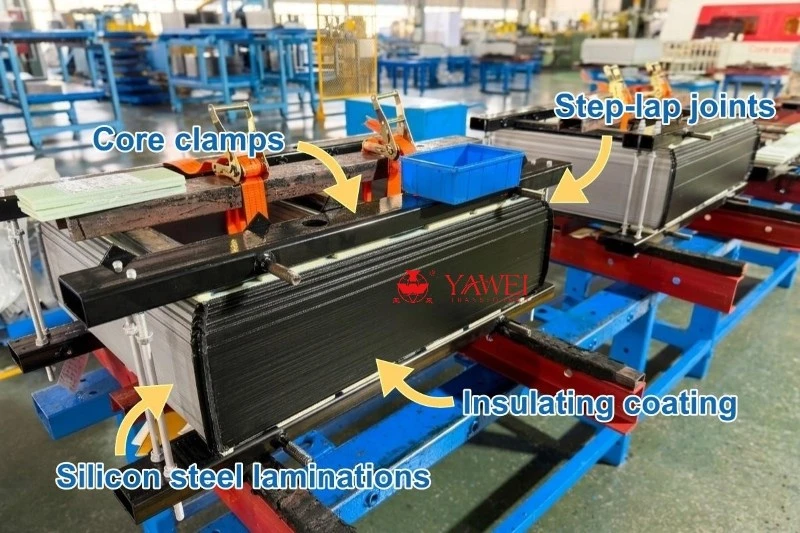
A transformer does not create energy. It trades voltage and current according to the power being transferred, minus losses. When voltage is stepped up, current decreases for roughly the same power level. When voltage is stepped down, current increases. This relationship is why electrical grids use high voltage for long-distance transmission and lower voltage closer to the final load.
Power transformers for high-capacity energy transfer
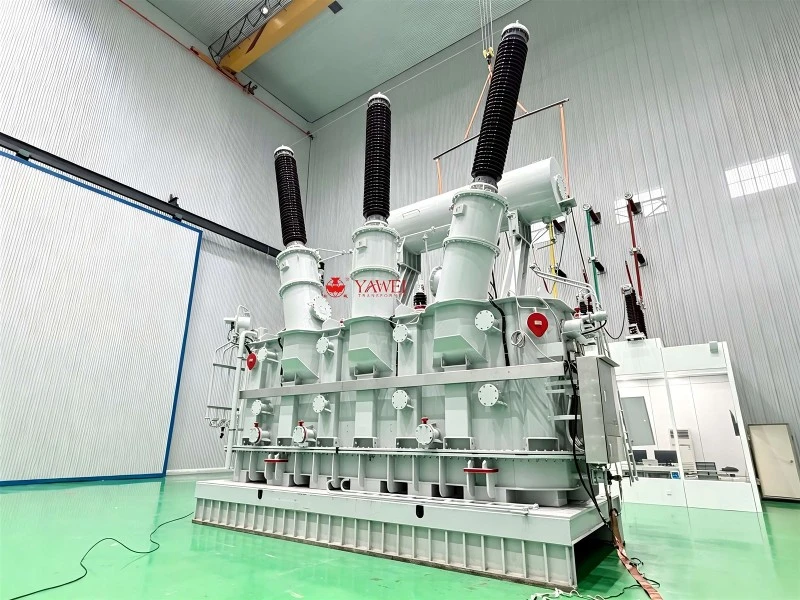
Power transformers are designed for large-scale energy movement, especially in generation stations, transmission substations, and major industrial systems. Their role is to step voltage up for efficient transmission or step it down at substations before electricity enters local distribution networks.
These units are usually built for high efficiency at heavy loading because even small percentage losses can matter when power levels are large.
They often operate at high voltages and may include complex insulation systems, cooling equipment, protective devices, tap changers, and monitoring features. Their size and design depend on voltage class, capacity, duty cycle, site conditions, and grid requirements.
A power transformer may be used to connect a generating plant to a transmission line, link two voltage levels within a grid, or supply a large industrial facility. Because these transformers handle substantial energy, specification and maintenance require careful engineering. Factors such as short-circuit strength, insulation coordination, temperature rise, oil quality, and protection settings can all affect long-term reliability.
Where power transformers are commonly used
Power transformers are most common in:
Electrical generation plants
Transmission substations
High-voltage interconnections
Large industrial facilities
Renewable energy plants connecting to the grid
Utility networks where bulk power transfer is required
The key idea is scale. Power transformers are chosen when voltage conversion must support high-capacity power flow, not just local equipment service.
Distribution transformers for everyday power delivery
Distribution transformers reduce medium-voltage power to lower voltages that can be used by homes, commercial buildings, farms, and small industrial loads. They are the transformer types many people see mounted on utility poles, placed on concrete pads, or installed near buildings.
Unlike power transformers, distribution transformers are located near the end of the electrical delivery chain. They are designed to serve changing daily loads, often operating continuously as demand rises and falls. Because they may remain energized around the clock, low no-load losses and suitable efficiency across varying load levels are important design considerations.
Distribution transformers come in several forms, including pole-mounted units, pad-mounted units, vault transformers, and dry-type units inside buildings. Their design depends on the installation environment, voltage requirements, safety considerations, and utility or facility standards.

Common distribution transformer applications
Distribution transformers are often used for:
Residential neighborhoods
Commercial buildings
Schools and public facilities
Light industrial facilities
Outdoor utility service points
Building electrical rooms
Rural electrical service
A distribution transformer's job is practical and local: deliver usable voltage safely and reliably where electricity is consumed.
How do isolation transformers protect equipment and people?
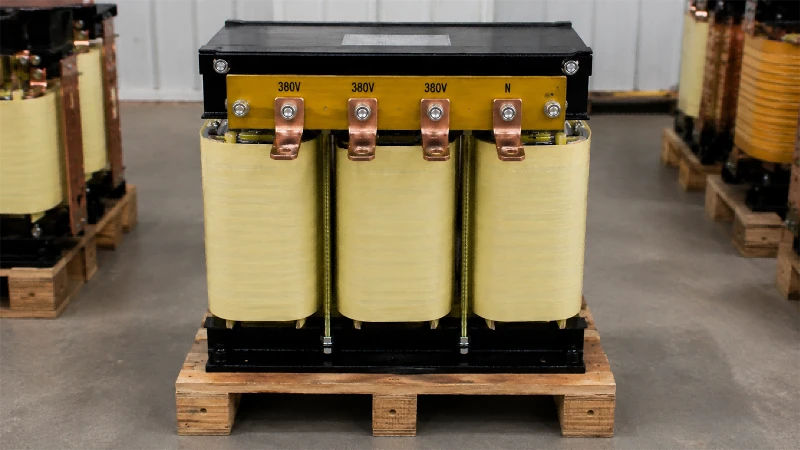
Isolation transformers protect by separating the input circuit from the output circuit, so there is no direct electrical connection between them.
Power still transfers through magnetic coupling, but the secondary circuit is electrically isolated from the primary. This separation can reduce shock hazards in certain controlled applications, limit noise transfer, help manage grounding issues, and protect sensitive equipment from some disturbances.
Isolation transformers are widely used in laboratories, medical-related equipment systems where properly specified, industrial controls, test benches, data systems, and audio or instrumentation setups. They are not a universal safety cure, but they can be valuable when isolation is part of a properly designed electrical system.
The important distinction is that isolation transformers typically have separate primary and secondary windings. That physical separation is what differentiates them from auto transformers, which share part of the winding and do not provide the same type of isolation.
Practical benefits of isolation transformers
Isolation transformers may help with:
Separating sensitive equipment from source-side disturbances
Reducing certain types of electrical noise
Creating a separately derived system when designed and installed correctly
Improving safety during bench testing when used with proper procedures
Limiting ground-loop issues in some measurement and audio applications
However, correct grounding, overcurrent protection, enclosure selection, and installation practices still matter. An isolation transformer should be selected as part of a complete safety and power-quality strategy, not as a stand-alone fix for every electrical problem.
Auto transformers and efficient voltage adjustment
Auto transformers use a single winding with taps instead of fully separate primary and secondary windings. Part of the winding is common to both input and output. This design can be smaller, lighter, and more efficient than a two-winding transformer for certain voltage conversion ratios.
Auto transformers are commonly used where the input and output voltages are relatively close and electrical isolation is not required. Examples include voltage regulation, motor starting, equipment testing, and matching supply voltage to a load. Variable auto transformers allow adjustable output voltage, which can be useful in labs, maintenance work, and controlled testing environments.
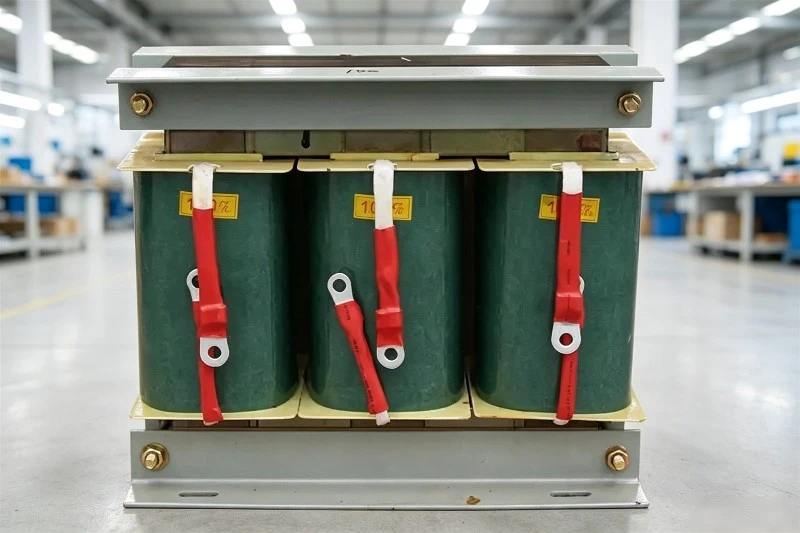
The tradeoff is isolation. Because the input and output are electrically connected through the winding, auto transformers should not be used where circuit separation is required for safety, noise control, or system design. When comparing transformers and their types, this is one of the most important distinctions to remember: auto transformers can be efficient and economical, but they do not replace isolation transformers.
Step-up and step-down transformers
Step-up and step-down transformers describe voltage direction rather than a specific physical style. A step-up transformer increases voltage from primary to secondary. A step-down transformer decreases voltage from primary to secondary.
Step-up transformers are used when electrical power must travel efficiently over long distances or when equipment requires a higher voltage than the available supply. In power systems, generation voltage is often increased for transmission because higher voltage reduces current for the same power transfer, helping reduce line losses.
Step-down transformers are used wherever voltage must be reduced for safer or more practical use. Distribution transformers are usually step-down transformers, lowering utility voltage to service levels. Control transformers inside equipment also step voltage down to operate relays, contactors, sensors, and control circuits.
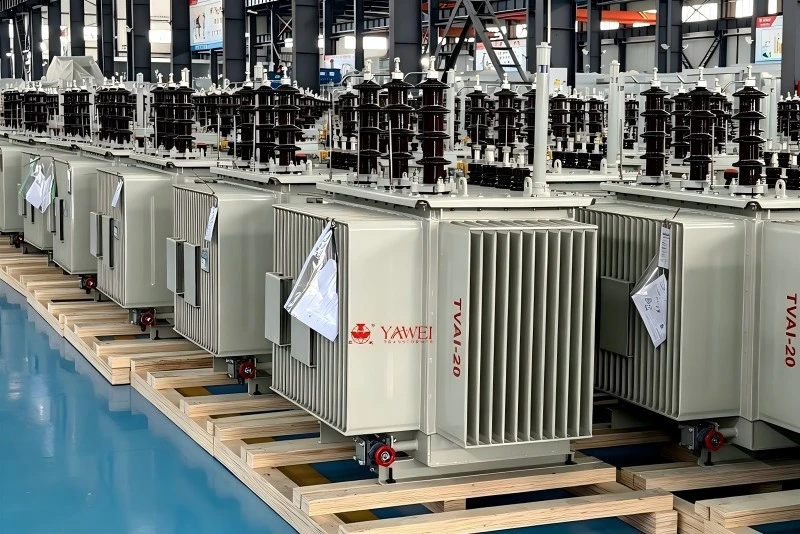
A quick way to understand the difference:
Step-up transformer: lower input voltage, higher output voltage, lower output current for similar power.
Step-down transformer: higher input voltage, lower output voltage, higher output current for similar power.
Isolation transformer: similar voltage may be maintained, but the primary purpose is circuit separation.
Auto transformer: voltage is adjusted with a shared winding, usually without isolation.
Single-phase and three-phase transformer types
Single-phase transformers are used with single-phase electrical systems, which are common in residential, small commercial, lighting, and control applications. They have one primary phase and one secondary phase. Their construction is generally simpler than three-phase units, although their ratings and designs still vary widely.
Three-phase transformers serve three-phase power systems, which are common in commercial buildings, industrial facilities, utilities, and large motors. Three-phase transformation can be handled by one three-phase transformer or by a bank of three single-phase transformers. The best choice depends on system design, redundancy needs, space, cost, maintenance practices, and replacement strategy.
Three-phase transformers may use different winding connections, such as delta or wye arrangements. These connections affect grounding, voltage relationships, fault behavior, and harmonic performance. In many real-world systems, transformer selection is closely tied to how the electrical system is grounded and protected.

Dry-type and oil-filled transformer construction
Dry-type transformers use air and solid insulation rather than liquid oil for cooling and insulation. They are often installed indoors, in commercial buildings, industrial plants, and locations where liquid-filled equipment may be less desirable. Ventilated dry-type transformers rely on air circulation, while sealed or cast-resin designs offer added protection in certain environments.
Oil-filled transformers use insulating liquid to help cool internal components and provide dielectric strength. They are common in utility, outdoor, and higher-capacity applications. The liquid transfers heat away from the windings and core to the tank and cooling surfaces. Some units use mineral oil, while others may use alternative insulating fluids depending on environmental, fire-safety, or application requirements.
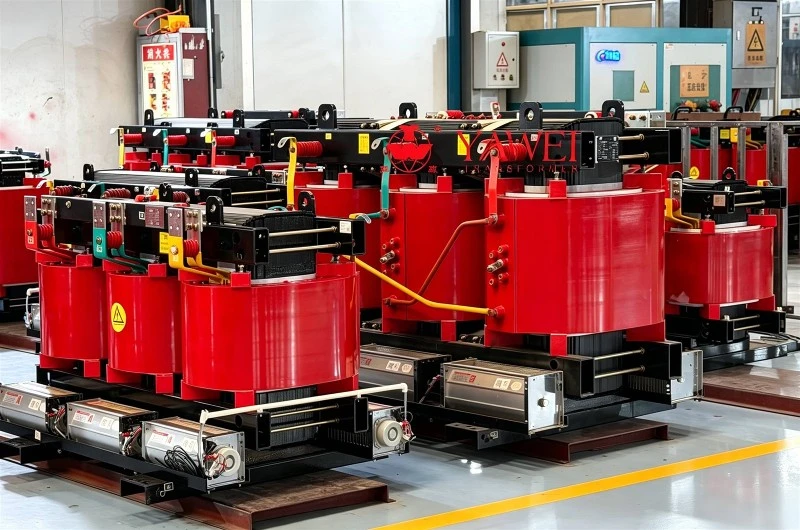
The choice between dry-type and oil-filled designs depends on installation location, capacity, fire considerations, maintenance preferences, environmental exposure, noise requirements, and local rules. Neither design is automatically better in every case. The right option depends on the electrical and site conditions.
Instrument transformers for measurement and protection
Instrument transformers scale high current or high voltage down to safer, standardized values for meters, relays, and control equipment. They are essential because most measuring devices cannot connect directly to high-energy circuits.
Current transformers, often called CTs, produce a reduced current proportional to the current flowing in a conductor. They are used for metering, protective relaying, monitoring, and energy management. Proper CT selection includes ratio, accuracy class, burden, saturation behavior, and safe secondary handling.
Voltage transformers, also called potential transformers in some contexts, reduce voltage to a level suitable for instruments and protective devices. They allow monitoring equipment to measure system voltage without direct exposure to the full primary voltage.
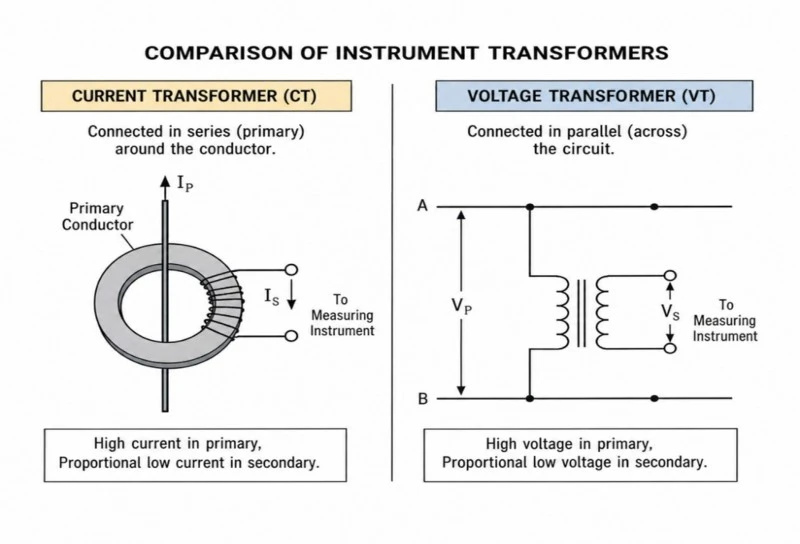
Instrument transformers may seem small compared with power transformers or distribution transformers, but they play a major role in system safety and control. Protective relays depend on accurate signals to detect faults and operate breakers correctly.
Specialized transformer designs
Beyond the major categories, many electrical transformers are built for specific duties. These transformer types may be selected when standard voltage conversion is not enough.
Control transformers
Control transformers supply lower voltage to control circuits in machinery, HVAC systems, panels, and automation equipment. They are designed to handle inrush from relays, contactors, solenoids, and other control devices. Reliable control voltage helps equipment start, stop, and respond consistently.
Toroidal transformers
Toroidal transformers use a ring-shaped core. They can be compact and may produce lower stray magnetic fields than some traditional core shapes when properly designed. They are common in electronics, audio equipment, and specialized power supplies.
Buck-boost transformers
Buck-boost transformers make small voltage adjustments up or down. They are useful when supply voltage is slightly too high or too low for equipment requirements. In many applications, they offer a practical alternative to replacing larger electrical infrastructure.
Grounding transformers
Grounding transformers provide a ground reference for systems that otherwise lack one, such as certain delta-connected systems. They help support ground-fault detection and system stabilization when engineered correctly.
How should you choose between transformer types?
You should choose between transformer types by starting with the load, voltage, isolation needs, environment, duty cycle, and safety requirements. The best transformer is not simply the largest or most feature-rich option; it is the one that matches the electrical system and installation conditions without unnecessary complexity.
A practical selection process includes:
Define the primary and secondary voltage. Confirm supply voltage, required output voltage, frequency, and whether the system is single-phase or three-phase.
Calculate the required capacity. Determine load current, apparent power, starting current, continuous demand, and any expected future load growth.
Identify the purpose. Decide whether the priority is voltage conversion, isolation, distribution, metering, control power, grounding, or regulation.
Check isolation requirements. Use isolation transformers when electrical separation is required. Do not assume auto transformers provide isolation.
Match the environment. Consider indoor or outdoor installation, ventilation, moisture, dust, temperature, corrosion, noise, and available space.
Review protection needs. Coordinate fuses, breakers, grounding, surge protection, and relay settings with the transformer design.
Consider efficiency and losses. Evaluate operating profile, loading pattern, no-load losses, and heat management.
Plan for installation and maintenance. Include access, lifting, clearances, inspection, testing, and future replacement.
This checklist helps narrow the many types of transformers into a smaller set of realistic options.
Safety, installation, and maintenance considerations
Transformers are dependable when correctly selected and maintained, but they still require respect. Improper sizing, poor ventilation, loose connections, moisture intrusion, overloaded circuits, and incorrect grounding can lead to overheating, nuisance trips, insulation damage, or unsafe conditions.
Installation should follow applicable codes, manufacturer instructions, and qualified engineering or electrical guidance. Important details include conductor sizing, overcurrent protection, bonding, grounding, enclosure rating, clearances, seismic or mounting requirements, and ventilation. Transformers also generate heat and sound, so placement can affect comfort and reliability.
Maintenance needs vary by design. Dry-type transformers may require cleaning, connection checks, thermal inspection, and ventilation review.
Oil-filled transformers may require fluid testing, leak checks, bushing inspection, temperature monitoring, and protective device review.
Instrument transformers and control transformers should also be checked as part of broader system maintenance.
Warning signs that deserve attention include:
Unusual humming, buzzing, or vibration
Excessive heat or discoloration
Burning odors or visible insulation damage
Oil leaks on liquid-filled units
Repeated fuse or breaker operation
Corrosion, moisture, or contamination
Inaccurate meter readings or relay alarms
When these issues appear, the safest response is to involve qualified personnel rather than treat the transformer as a simple replaceable accessory.
Key takeaways about transformers and their types
Different transformer types exist because electrical systems have different needs. Power transformers move large amounts of energy across high-voltage networks. Distribution transformers bring voltage down for everyday use. Isolation transformers separate circuits for safety, noise reduction, or system design. Auto transformers adjust voltage efficiently when isolation is not required.
Other categories refine the choice. Step-up and step-down transformers describe voltage direction. Single-phase and three-phase transformers match the power system. Dry-type and oil-filled transformers address construction, cooling, and installation environment. Instrument transformers support measurement and protection.
If you remember one rule, make it this: define the job before choosing the transformer. Voltage, load, phase, isolation, environment, efficiency, protection, and maintenance all shape the right decision. With those fundamentals in place, the many types of transformers become easier to understand, compare, and apply safely.
Q: How soon can you delivery the transformer?
A: It depends on the quantity and capacity of the transformer, normally within one month since the date drawing confirmed by buyer.
Q: How long can you provide the quality warranty?
A: 24 months since the date transformer operated.
Q: What payment method do you accept?
A: T/T (wire transfer) preferred, L/C both accepted.


