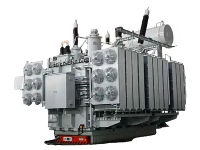
Hey there! Let's face it: when we talk about a Virtual Data Center (VDC), it sounds like this magical, invisible cloud where apps and data just float around effortlessly. But the reality? Every single VM, AI workload, and cloud app you spin up relies on a massive, heavy-duty physical foundation.
Here is a look at how VDCs actually work, and why old-school physical hardware-specifically power transformers-is still the real backbone of the digital world.

What Actually Goes Into a Virtual Data Center?
Instead of stacking rows of physical servers every time you need more juice, a VDC pools together computing, storage, and networking resources using software. It gives you the same muscle as a traditional setup, just without the hardware headache.
Here is the quick breakdown of the core components:
| Component | What It Actually Does |
| Virtual Servers | The heavy lifters. They handle the computing power for your apps. |
| Virtual Storage | Software-defined tech that keeps your data safe without needing endless physical drives. |
| Virtual Networks | The digital glue connecting VMs, applications, and users. |
| Management Platform | The "brain" or dashboard used for monitoring, automation, and tweaking resources. |
| Security Services | Think digital bouncers-firewalls, access controls, and overall cyber defense. |
The Unsung Hero: Why Transformers Keep the Digital Lights On
Virtualization is great for efficiency, but software can't power itself. Data centers are power-hungry beasts. Between the servers, cooling systems, and massive UPS units, they need rock-solid, stable electricity.
That is where physical transformers step in. They handle a few messy, behind-the-scenes jobs that keep everything from crashing:
Taming High Voltage: Utilities send power over long distances at insanely high voltages. Transformers step that down to a level that won't instantly fry delicate IT gear.
Electrical Isolation: Think of them as a shield. They protect sensitive electronic components from random grid spikes, surges, and faults.
Cleaning Up "Dirty" Power: Modern servers and cooling systems create a lot of electrical noise (or harmonics). This stuff wastes energy and generates nasty extra heat. Specialized transformers smooth things out to keep power quality high.
Keeping the Safety Net Ready: Because downtime is a nightmare, most critical facilities run redundant, backup transformer setups. If one takes a nap or needs maintenance, the other jumps right in.
The Different Transformers Getting the Job Done
You can't just slap any transformer into a data center. Depending on the setup, engineers use a few different types:
 Dry-Type Transformers
These guys use regular air for cooling instead of liquid insulation. They are perfect for indoor use because they carry a super low fire risk, require barely any maintenance, and are pretty eco-friendly.
Cast Resin Transformers
A step up for tougher spots. The internal windings are completely sealed in epoxy resin, keeping out moisture, dust, and junk. They're incredibly reliable and fire-safe.
 Pad-Mounted Transformers
You've probably seen these outside-they live in secure metal boxes on the ground. Hyperscale and massive campus-style data centers love them because they save valuable indoor floor space and make hooking up to the main utility grid a breeze.
Harmonic Mitigating Transformers (HMTs)
With power-hungry AI workloads on the rise, HMTs are becoming essential. They specifically target and neutralize harmonic distortion, which saves equipment lifespans and keeps the whole system running way more efficiently.
Virtual vs. Physical: The Showdown
While both worlds ultimately rely on the same physical infrastructure-like switchgear, generators, and transformers-how they operate day-to-day is completely different.
| Feature | Virtual Data Center | Physical Data Center |
| Resource Allocation | Software-defined (click and go) | Hardware-dependent (plug it in) |
| Scalability | Crazy fast and dynamic | Limited by whatever gear you actually bought |
| Deployment Speed | Minutes or hours | Days, weeks, or sometimes months |
| Hardware Utilization | High (you squeeze out every drop) | Often lower (lots of idle gear) |
| Management | Centralized software controls | Hands-on, manual hardware management |
| Initial Investment | Way lower | Massive upfront costs |
| Flexibility | Incredible | Pretty restrictive |
What's Next?
As cloud computing and AI keep blowing up, the demand on the grid is getting intense. Transformers are evolving to keep up, getting packed with smart sensors for predictive maintenance, better efficiency ratings, and smoother integration with green, renewable energy sources.
The Takeaway
VDCs give us insane flexibility and speed through software. But at the end of the day, bytes rely on volts. Behind every seamless app experience is a very real, very physical power system working flawlessly in the background-and transformers are the ones making sure that electricity actually delivers.
FAQ
Q: How soon can you delivery the transformer?
A: It depends on the quantity and capacity of the transformer, normally within one month since the date drawing confirmed by buyer.
Q: How long can you provide the quality warranty?
A: 24 months since the date transformer operated.
Q: What payment method do you accept?
A: T/T (wire transfer) preferred, L/C both accepted.