Modern data centers? They're basically the nervous system of today's digital world-cloud platforms, AI models, banking transactions, you name it. But here's the thing most people don't see: behind every rack of servers, there's a seriously complex data center power distribution setup working around the clock to keep everything humming. And when we say "around the clock," we mean it. Even a tiny blip in power can throw operations into chaos, corrupt data, and cost companies anywhere from thousands to-no exaggeration-millions of dollars.

So, what does that system actually look like? This guide breaks down a typical data center power architecture, walks through the job of each major component, and explains why intelligent monitoring and high-efficiency gear are quickly becoming must-haves in today's mission critical power systems.
So, What Exactly Is Data Center Power Distribution?
In plain terms, data center power distribution is the entire electrical chain that gets power from the utility grid all the way to your servers, storage, networking gear, and those power-hungry AI clusters.
But it's not just about moving electricity from point A to point B. A well-designed system also:
Keeps uptime as close to 100% as possible
Protects equipment from surges, sags, and other electrical gremlins
Supports redundant paths so nothing's a single point of failure
Helps cut energy waste (which is good for both the planet and the P&L)
Leaves room to grow as demand increases
Makes maintenance and monitoring way less painful
With AI workloads, edge computing, and hyperscale facilities exploding in recent years, getting the power distribution infrastructure right has become one of the most critical investments an operator can make.
How Power Flows Through a Typical Data Center
Electricity doesn't just magically appear at the server-it goes through a series of well-orchestrated stages before it gets there. Here's the basic path:
Each link in that chain has a specific job, and together they keep things stable, efficient, and-hopefully-always on.
Utility Power and Medium Voltage Distribution
It all starts with the local utility feeding electricity into the facility, usually at medium voltage-think 11 kV, 13.8 kV, 22 kV, or 33 kV.
That incoming power first hits the medium voltage switchgear, which does a few critical things:
Protects circuits from faults
Isolates problems when something goes wrong
Allows safe switching operations
Lets maintenance crews work without shutting everything down
In other words, it's the gatekeeper that stops electrical issues from spreading downstream.
The Data Center Transformer: More Than Just Voltage Conversion
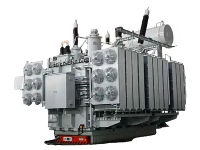
Now we get to one of the real heavyweights: the data center transformer.
Its primary job is to step that medium voltage down to something servers can actually use-typically 480 V, 415 V, 400 V, or 380 V.
But today's medium voltage transformer solutions do a lot more than just convert voltage. The better ones come with:
High-efficiency cores that waste less energy as heat
Advanced insulation systems for longer life
Lower operating temperatures
Quieter operation (your neighbors will thank you)
Smaller footprints-because floor space is expensive
Built-in digital monitoring capabilities
And since transformers run 24/7/365, even a small efficiency bump can translate into serious energy savings over their lifetime.
Main Electrical Distribution
Once the voltage is stepped down, power moves into the facility's data center electrical distribution network.
Key players here include:
Main switchboards
Low voltage switchgear
Main distribution panels
Distribution feeders
These components split the power into multiple independent circuits that feed different parts of the data center. A modular design also makes future expansion easier-no need to take everything offline just to add capacity.
UPS Systems: The Safety Net
The UPS system for data center applications is your first line of defense  when utility power goes sideways.
If the grid fails, the UPS jumps in instantly with battery power while backup generators spin up. That seamless transition prevents servers from crashing or rebooting-which, let's be honest, is kind of the whole point.
Modern UPS units also handle:
Instant backup power
Voltage regulation
Frequency stabilization
Harmonic filtering
General power conditioning
Large facilities often run N+1, 2N, or even 2N+1 redundancy to maximize availability and eliminate single points of failure.
Backup Generators: When Batteries Aren't Enough
Batteries only last so long, which is why generators are a core part of mission critical power systems.
When an outage hits, here's roughly what happens:
The UPS takes over instantly.
The Automatic Transfer Switch (ATS) detects the loss of utility power.
Backup generators fire up automatically.
The ATS transfers the load to generator power.
Once utility power returns and stabilizes, the system switches back safely.
This layered approach keeps things running even during extended grid failures-because nobody wants to explain to the C-suite why the data center went dark.
Power Distribution Units (PDUs)
After power leaves the UPS, it gets distributed through  Power Distribution Units (PDUs).
A power distribution unit (PDU) feeds electricity to server rooms, rows of cabinets, or specific zones, while making sure loads stay balanced across phases.
Modern intelligent PDU offerings go way beyond just plugging things in. Typical features include:
Per-outlet monitoring
Remote outlet switching (super handy for troubleshooting)
Load balancing visibility
Energy metering
Environmental monitoring (temperature, humidity, etc.)
Alarm notifications
These give operators the data they need to optimize utilization and cut waste-without guessing.
 Rack PDUs: The Final Mile
At the very end of the chain, power reaches the cabinets through rack PDU devices.
A rack PDU distributes electricity directly to:
Servers
Storage systems
Network switches
Firewalls
GPU clusters
AI accelerators
Advanced rack PDUs continuously track:
Voltage
Current
Active power
Power factor
Energy usage
Temperature
Having real-time visibility means you can spot overloaded circuits before they become actual problems-because nobody likes tripped breakers at 2 a.m.
Why Redundancy Matters
Data centers are paranoid about downtime-and for good reason. That's why redundancy is built into almost every layer of the electrical infrastructure.
| Redundancy Model | Description | Typical Use |
|---|---|---|
| N | Single power path, no backup | Small facilities |
| N+1 | One extra backup component | Enterprise data centers |
| 2N | Two completely independent power paths | Hyperscale and mission-critical sites |
| 2N+1 | Dual paths plus one more backup | Maximum resilience |
Picking the right level depends on your budget, your business requirements, and how many "nines" of uptime you're actually aiming for.
Intelligent Monitoring: Because Guessing Isn't Good Enough
As data centers get bigger and more complex, walking around with a clipboard and a multimeter just doesn't cut it anymore.
Operators are increasingly relying on digital monitoring platforms that give continuous insight into electrical assets across the facility.
Common capabilities include:
Real-time equipment tracking
AI-assisted fault detection
Thermal imaging
Energy analytics
Remote diagnostics
Automated alerts
Historical trend analysis
This shift toward smarter infrastructure doesn't just improve efficiency-it also reduces those dreaded "surprise" failures.
Transformer Condition Monitoring and Predictive Maintenance
Transformers are among the most expensive and critical assets in a  data center, which is why transformer condition monitoring has become a big part of reliability planning.
Modern monitoring systems continuously track things like:
Oil temperature
Winding temperature
Load current
Moisture levels
Partial discharge activity
Insulation condition
Many facilities also perform dissolved gas analysis (DGA) to catch developing internal faults early-before they turn into catastrophic failures.
Combined with smart transformer monitoring, these insights enable transformer predictive maintenance. Instead of sticking to rigid service calendars, teams can make data-driven decisions about when to repair or replace components. That means fewer unexpected outages and longer equipment life-pretty good ROI, if you ask me.
Supporting AI Data Centers
AI is changing the game in a big way. Those high-density GPU clusters? 
They demand:
Way more electrical capacity
Better cooling efficiency
Tighter load balancing
Faster fault detection
Flexible power expansion
So modern power distribution infrastructure has to be built with scalability in mind-ready to handle increasing compute density without compromising reliability.
Best Practices for Modern Data Center Power Architecture
If you're planning a new facility or upgrading an existing one, here are some solid practices to keep in mind:
Choose high-efficiency transformers to cut energy losses.
Deploy intelligent PDUs for granular, per-rack monitoring.
Implement transformer condition monitoring on all critical units.
Perform dissolved gas analysis (DGA) during routine inspections.
Adopt transformer predictive maintenance instead of reactive repairs.
Design redundant power paths for anything mission-critical.
Monitor energy consumption continuously to find and fix waste.
Build scalable power distribution so you're not stuck later.
Wrapping It Up
A well-thought-out data center power architecture is the foundation of reliable digital operations. From the medium voltage transformer and low voltage switchgear to the UPS system for data center, power distribution unit (PDU), and rack PDU-every piece plays a role in keeping services running.
And with AI and cloud computing pushing power demands higher every year, intelligent technologies like transformer condition monitoring, smart transformer monitoring, dissolved gas analysis (DGA), and transformer predictive maintenance are quickly becoming standard-not optional extras.
Invest in efficient gear, build in sensible redundancy, and embrace advanced monitoring-and you'll end up with a resilient power distribution infrastructure that supports long-term growth while keeping downtime and operating costs in check.
FAQ
Q: How soon can you delivery the transformer?
A: It depends on the quantity and capacity of the transformer, normally within one month since the date drawing confirmed by buyer.
Q: How long can you provide the quality warranty?
A: 24 months since the date transformer operated.
Q: What payment method do you accept?
A: T/T (wire transfer) preferred, L/C both accepted.