Let's face it-data centers run the world these days. Whether it's streaming your favorite show, processing a credit card payment, or training the next generation of AI models, almost everything depends on them. And what do businesses care about most? That it all just works-without interruption.
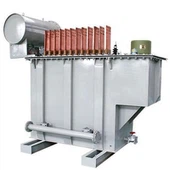
That's where mission critical infrastructure comes into play. It's the combination of power, cooling, and connectivity that keeps digital services alive. And while servers and networking gear tend to steal the spotlight, there's a quieter, behind‑the‑scenes hero that deserves way more credit: the transformer.

What Exactly Is Mission Critical Infrastructure?
Simply put, it's the collection of systems that absolutely cannot fail-because if they do, things go south fast. Outages mean lost revenue, angry customers, and a whole lot of headaches.

In a data center, this typically includes:
Utility power feeds
Transformers (yes, they're on the list)
UPS systems and backup generators
Power distribution units (PDUs)
Networking hardware
Monitoring and control platforms
All of these need to work together seamlessly, often aiming for that near‑mythical 99.999% uptime. No pressure, right?
How Transformers Fit Into the Picture
Here's the thing: electricity from the grid comes in at voltages that would fry your typical server in a heartbeat. Transformers step that voltage down to something safer and more usable.
The usual power path looks something like this:
Utility Grid → Substation → Transformer → UPS → PDU → Server Rack
Without that transformer in the middle, you simply can't distribute power safely to all the IT gear, storage arrays, networking switches, or cooling units. It's that fundamental.
Why Transformers Are Critical to Mission Critical Infrastructure
Let's break it down into a few key reasons.

1. Keeping Power Reliable
Stable voltage isn't just nice to have-it's a must. Even small fluctuations can mess with sensitive electronics, shorten equipment life, or trigger unexpected shutdowns. A well‑designed transformer system smooths out those bumps and helps keep things running steadily.
2. Building in Redundancy
Most modern data centers run on N+1, 2N, or even 2N+1 redundancy designs. Transformers are a core part of that equation. By installing multiple units, you can take one offline for maintenance-or even lose one to a fault-without affecting live operations. That's resilience in action.
3. Saving Energy (and Money)
Operators are under constant pressure to cut costs and hit sustainability targets. High‑efficiency transformers might not seem like a huge deal individually, but across a massive campus, those small percentage losses add up fast. Better transformer selection also helps improve PUE (Power Usage Effectiveness), which is the industry's favorite metric for tracking energy performance.
4. Powering the AI Boom
This is where things get really interesting. AI workloads-especially GPU‑heavy ones-are power‑hungry beasts. They draw way more juice than traditional compute. To support that, data center operators are upgrading their mission critical infrastructure with larger transformers, beefier substations, and smarter distribution. Without that scalable capacity, next‑gen AI simply wouldn't be feasible.
Common Transformer Types You'll See
Depending on the facility, you might run into any of these:
| Transformer Type | Typical Use Case |
|---|---|
| Power Transformer | Utility and substation voltage conversion |
| Substation Transformer | Primary power distribution |
| Dry‑Type Transformer | Indoor installations with extra safety requirements |
| Pad‑Mounted Transformer | Outdoor utility connections |
| Isolation Transformer | Power quality improvement and equipment protection |
Choosing the right one depends on facility size, load demands, redundancy needs, and even environmental factors-it's never a one‑size‑fits‑all decision.
Keeping Them Healthy: Maintenance and Monitoring
Since transformers are such a foundational piece of mission  critical infrastructure, you can't just install them and forget about them. Smart operators keep a close eye on:
Temperature and load levels
Insulation condition
Voltage stability and harmonic distortion
Modern monitoring platforms give you real‑time visibility, so you can spot potential issues before they become full‑blown failures. And with predictive maintenance, you can catch early warning signs and significantly cut down on unplanned downtime.
What's Next for Mission Critical Infrastructure?
With cloud computing, edge deployments, and AI workloads all growing like crazy, data centers are going to need increasingly sophisticated power systems. Transformers won't just stay relevant-they'll become even more central to how we design and operate these environments.
We're already seeing early moves toward smart transformers, deeper integration with DCIM (Data Center Infrastructure Management) platforms, and more advanced monitoring. All of that points toward better reliability, higher efficiency, and the ability to scale without breaking the bank-or the grid.
FAQ
Q: How soon can you delivery the transformer?
A: It depends on the quantity and capacity of the transformer, normally within one month since the date drawing confirmed by buyer.
Q: How long can you provide the quality warranty?
A: 24 months since the date transformer operated.
Q: What payment method do you accept?
A: T/T (wire transfer) preferred, L/C both accepted.